Introduction: the cheapest screen is not always the best purchase
For Latin American distributors and repair shops, choosing a replacement screen is a business decision as much as a technical one. The correct screen must match the phone model, satisfy the end customer’s expectations, survive local installation conditions, and leave enough margin after freight, taxes, warranty claims, and rework.
After two decades in mobile phone spare-parts export wholesale, ARIELK, We recommend evaluating every screen in three steps:
1.Confirm exact compatibility. Start with the phone’s complete model code, not only the commercial name.
2.Choose the appropriate screen technology. LCD, In-Cell, OLED, and Soft OLED serve different price and quality positions.
3.Test the real batch before scaling the order. A sample that works is not enough; consistency across the shipment matters more.
This guide explains the differences and provides a practical purchasing framework for Samsung Galaxy, Motorola Moto, and Xiaomi and Redmi models.
First, identify the exact phone version
A replacement screen is designed for a specific display assembly. Two phones with similar names can use different connectors, flex cables, frames, resolutions, refresh rates, or touch-control systems. Regional versions may also differ.
Before requesting a quotation, send the supplier:
•The complete model number, such as the code shown in the phone settings, on the label, or through a reliable device database.
•Whether you need the screen only, a screen with touch digitizer, or a complete assembly with frame.
•The original display technology, if known.
•Whether the phone uses a flat or curved display.
•The required quantity and intended market segment.
Do not order only “Samsung A-series screen” or “Xiaomi Note screen.” Those descriptions are too broad for safe purchasing. Ask the supplier to confirm the exact model code, connector version, resolution, refresh rate, frame color, and assembly type in writing.
LCD, In-Cell, OLED, and Soft OLED: what is the difference?
LCD: the value-focused option
An LCD, or liquid-crystal display, uses a backlight behind the liquid-crystal layer. The backlight is always part of the display structure, so LCD assemblies are generally thicker than OLED assemblies. LCD can be an attractive replacement option when the original phone was built with LCD or when the target customer needs a low-cost repair.
For wholesale buyers, the main advantages are usually lower unit cost, broad availability, and predictable positioning in entry-level repairs. The limitations may include a thicker assembly, lower black-level performance, different color appearance, and more visible differences from the original screen on phones that were designed for OLED.
An LCD replacement can be commercially sensible for a budget repair. It should not be presented as equivalent to an original OLED screen unless the supplier has demonstrated that equivalence for the exact model.
In-Cell LCD: LCD with touch integrated into the panel
“In-Cell” describes how the touch-sensing function is integrated into the display structure. In a conventional assembly, the touch layer may be a separate component. In an In-Cell design, touch functionality is integrated into the LCD panel, which can reduce thickness and improve the assembly structure.
In-Cell is still an LCD category. It is not OLED. This distinction is important when comparing quotations. An In-Cell LCD may offer a better fit and a more responsive feel than a basic LCD, but its image characteristics remain those of an LCD panel.
When buying In-Cell screens, test the entire touch surface. Pay particular attention to edge response, multi-touch, keyboard accuracy, ghost touches, and touch performance after the screen is installed in the frame. A screen that passes a basic image test but fails at the edges can create costly returns.
OLED and AMOLED: self-emissive display technology
OLED means Organic Light-Emitting Diode. Unlike LCD, an OLED panel emits light from its own pixels and does not require a separate backlight. AMOLED means Active Matrix OLED; it is a type of OLED display used widely in smartphones. Samsung explains that AMOLED is a form of OLED technology and that individual pixels can be controlled to produce strong contrast and lower power use in suitable conditions. Samsung Display likewise describes OLED as a self-luminous technology in which the pixels emit light directly.
For a replacement buyer, OLED usually means:
•Deeper blacks and higher perceived contrast.
•A thinner assembly than a comparable LCD design.
•Faster pixel response in many implementations.
•A closer visual match for phones originally equipped with OLED.
OLED is normally positioned above LCD in price. It is often the better choice for premium Galaxy, Xiaomi, or Motorola models that originally shipped with an OLED or AMOLED panel. However, “OLED” on a quotation is not a complete quality specification. Brightness, color calibration, refresh-rate support, panel structure, polarizer, touch performance, and durability can vary significantly between products.
Hard OLED versus Soft OLED
The terms Hard OLED and Soft OLED normally refer to the substrate and construction of the OLED panel, not to two completely different display principles.
A Hard OLED commonly uses a rigid glass substrate. It can provide OLED image quality at a lower cost than many flexible designs, but the rigid structure may be more vulnerable to bending stress during installation or use. It can also create a different edge profile from the original assembly.
A Soft OLED uses a flexible substrate, commonly associated with a thinner and more flexible panel structure. It is often selected when a closer match to the original flexible OLED is required, especially for curved-edge or premium models. Soft OLED generally costs more, but the additional cost may be justified when the repair shop needs better fit, appearance, and perceived quality.
The word “soft” does not mean that the screen is poorly protected. It means the panel construction is flexible. The final assembly still requires correct adhesive, frame preparation, pressure control, and careful installation.
Which screen technology should a wholesaler choose?
The right answer depends on the original phone, the buyer’s target price, and the expected repair quality. The following table is a starting point, not a substitute for model-level testing.
| Customer need | Usually suitable option | Why | Main caution |
| Lowest-cost repair for an LCD phone | Standard LCD or In-Cell LCD | Controls purchase cost and supports budget repairs | Image and touch quality can differ by factory |
| Better touch performance in an LCD replacement | In-Cell LCD | Touch layer is integrated into the panel structure | Confirm edge touch and multi-touch behavior |
| Close visual match for an OLED phone at controlled cost | Compatible OLED or Hard OLED | Maintains OLED contrast and thinner construction | Check brightness, color, fit, and durability |
| Premium repair for a flexible or curved OLED phone | Soft OLED | Usually provides a closer flexible-panel construction | Higher cost and still requires strict quality control |
| Mixed wholesale customer base | Two or three grades | Covers budget, standard, and premium demand | Label grades clearly to avoid disputes |
A useful wholesale strategy is to stock clearly separated grades rather than one vague “high quality” grade. For example, a distributor can offer a budget LCD option where technically acceptable, a standard OLED or In-Cell option for price-sensitive repairs, and a Soft OLED option for customers who prioritize appearance and fit.
Brand-specific purchasing guidance
Samsung Galaxy Screens
Samsung’s product range includes entry-level LCD phones as well as models using AMOLED and flexible OLED technologies. Do not assume that every Galaxy screen should be replaced with OLED, and do not assume that every AMOLED replacement has the same performance.
For Samsung orders, confirm whether the replacement supports the functions expected from the original assembly. Depending on the model, these may include high refresh rate, always-on display behavior, curved edges, under-display fingerprint recognition, proximity sensing, and correct screen calibration.
For premium Galaxy models, Soft OLED is often the stronger commercial proposition when the customer expects an original-like appearance. Hard OLED may be suitable when the priority is price, but the supplier should disclose the construction clearly. For LCD-based Galaxy models, In-Cell LCD may offer a good balance between cost and usability.
Motorola Moto Screens
Motorola has a broad portfolio covering budget Moto models, mid-range devices, Edge-series products, and foldable Razr models. The screen technology therefore varies substantially by model. Motorola’s own repair guidance treats cracked screens as physical damage and emphasizes that repair options and costs depend on the device and service program. For the wholesale market, this reinforces a simple rule: identify the exact model before selecting the replacement grade.
For high-volume Moto models, compare total landed cost rather than unit price alone. A low-priced screen that causes installation failures, weak touch response, or a high return rate may be more expensive after labor and reverse logistics. For Edge or other curved OLED models, verify curvature, frame fit, adhesive alignment, and touch response near the edges before accepting a large order.
Xiaomi and Redmi Screens
Xiaomi and Redmi product families are especially price-sensitive and highly diverse. A distributor may need to serve customers who want the lowest repair price as well as customers who request an AMOLED-like replacement for a Note or flagship model.
For Xiaomi orders, pay close attention to the difference between the commercial model name and the exact regional or generation variant. Confirm the connector, flex layout, frame dimensions, camera and sensor openings, refresh-rate behavior, and whether the fingerprint sensor is integrated into or placed beneath the display assembly.
In the budget segment, a well-tested In-Cell LCD can be commercially attractive when the original phone and customer expectations permit it. In the AMOLED segment, compare Hard OLED and Soft OLED based on repair positioning. If the screen is curved or the customer expects a premium finish, Soft OLED may reduce complaints about fit and appearance.
The wholesale quality-control checklist
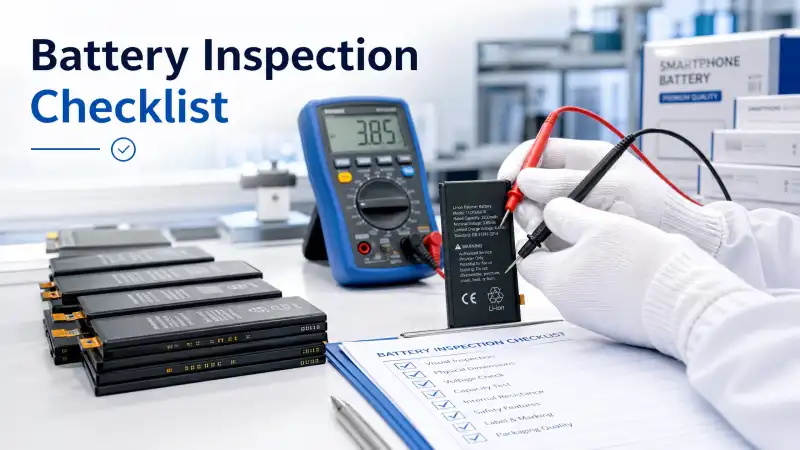
A reliable supplier should provide a written specification and a repeatable test process. Before shipment, ask for photographs or test records that show the product label, model code, connector, flex cable, and packaging. During incoming inspection, test a statistically meaningful sample from each batch rather than testing only one piece.
The minimum functional test should include display image, brightness, color uniformity, dead pixels, lines or spots, touch response across the full surface, multi-touch, connector stability, and proximity-sensor behavior where applicable. For OLED products, also check black display uniformity, burn-in or image retention signs, and whether the panel shows unusual tinting at low brightness.
For assemblies with a frame, verify that the display sits flat and that the frame does not interfere with buttons, cameras, sensors, or the rear housing. For screen-only products, confirm that the screen can be installed with the repair shop’s standard process. A screen that requires a different adhesive thickness or unusual pressure may have a higher failure rate even if it passes an open-bench test.
Keep a record of batch number, supplier, model code, grade, test results, and warranty terms. This makes it easier to identify whether a complaint comes from a wrong model, installation damage, transport damage, or a batch-quality problem.
How to compare supplier quotations
When comparing offers from different factories, ask each supplier to quote the same configuration. The quotation should state the technology, whether it is screen-only or a complete assembly, frame inclusion, touch type, refresh rate, grade, packaging, minimum order quantity, lead time, warranty period, and acceptable defect policy.
Ask these questions before placing the order:
1.Is the panel LCD, In-Cell LCD, OLED, Hard OLED, or Soft OLED?
2.Is the product compatible with the exact model code and regional version?
3.Does the quotation include the frame and adhesive, or only the panel assembly?
4.Does the screen support the original refresh rate and biometric or sensor functions?
5.What defects are covered under warranty, and what evidence is required?
6.How are DOA units, intermittent touch faults, and installation-related claims handled?
7.Is the quality grade consistent between the sample and mass production?
8.What packaging is used for export to Latin America, and how are mixed models labeled?
A professional supplier should answer these questions directly. If a quotation uses only terms such as “AAA,” “original quality,” or “best quality” without measurable specifications, request clarification before comparing prices.
A practical buying formula for Latin American distributors
For most Latin American wholesale customers, a balanced inventory has three characteristics. It covers the high-volume models in the local market, separates products by technology and quality grade, and includes a small number of premium options for repair shops that sell appearance and reliability rather than the lowest price.
Start with a small sample order for every new model or supplier. Measure the actual return rate and installation feedback. Then scale only the configurations that produce acceptable results. Keep packaging and labels in Spanish or Portuguese where useful, and make sure the model code remains visible for warehouse control. Before importing, also calculate freight, customs duties, local taxes, warranty replacements, and payment costs. The lowest factory price is only one part of the final margin.
Final recommendation
Choose LCD or In-Cell LCD when the phone and customer segment are budget-oriented and the repair shop accepts the corresponding performance level. Choose OLED when the original phone uses OLED and the buyer expects deeper contrast, a thinner assembly, and a closer visual experience. Choose Hard OLED when cost control matters but OLED performance is still required. Choose Soft OLED when fit, flexibility, curved edges, and a premium repair result justify the higher purchase price.
The safest purchasing decision is not based on the technology name alone. It combines exact model compatibility, transparent grade labeling, full-surface testing, supplier warranty support, and the actual economics of the Latin American distribution channel.
For a model list or sample quotation, provide the exact Samsung, Motorola, Xiaomi, or Redmi model codes, the required quantity, and your target quality grade. ArielK can then help you compare the suitable screen configuration before you place a wholesale order.
Ready to Build Your Screen Inventory?
Get a wholesale recommendation tailored to your market. Send ArielK your exact Samsung, Motorola, Xiaomi, or Redmi model list, required quantities, and target price range. We will help you compare LCD, In-Cell, OLED, and Soft OLED options, confirm compatibility, and select the right quality grade for your customers in Latin America.
Request your model-based quotation today and reduce purchasing risk before your next order.